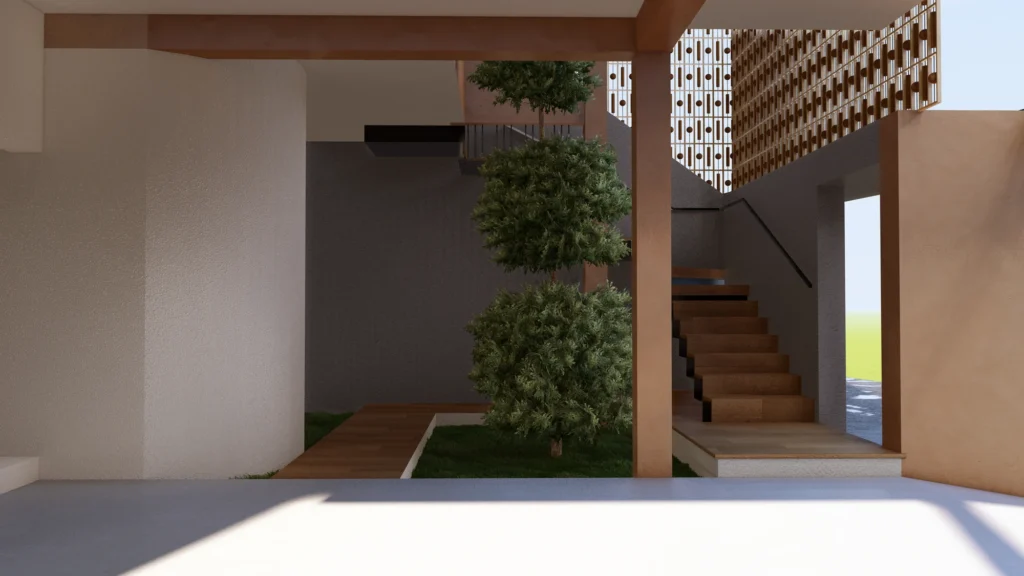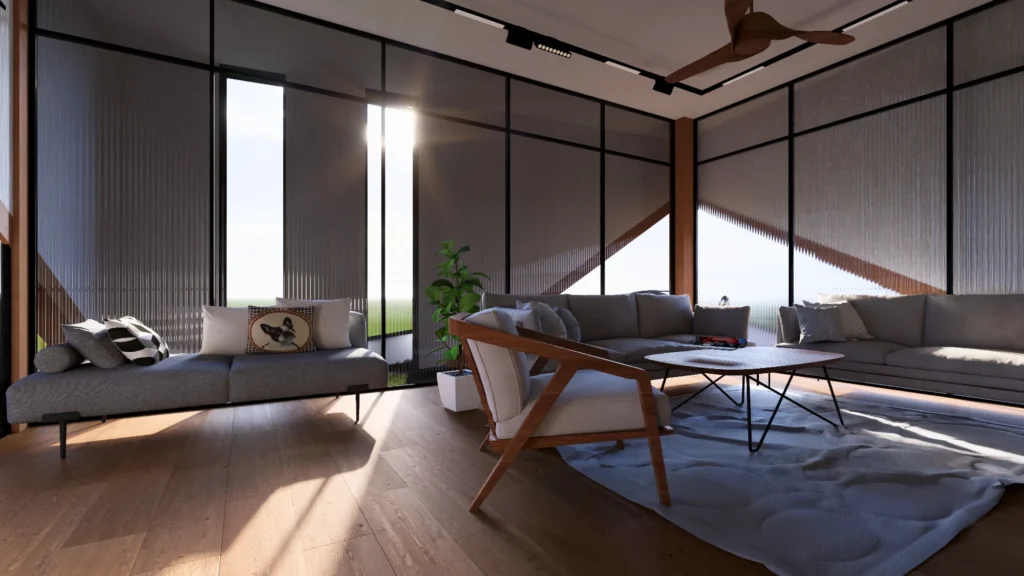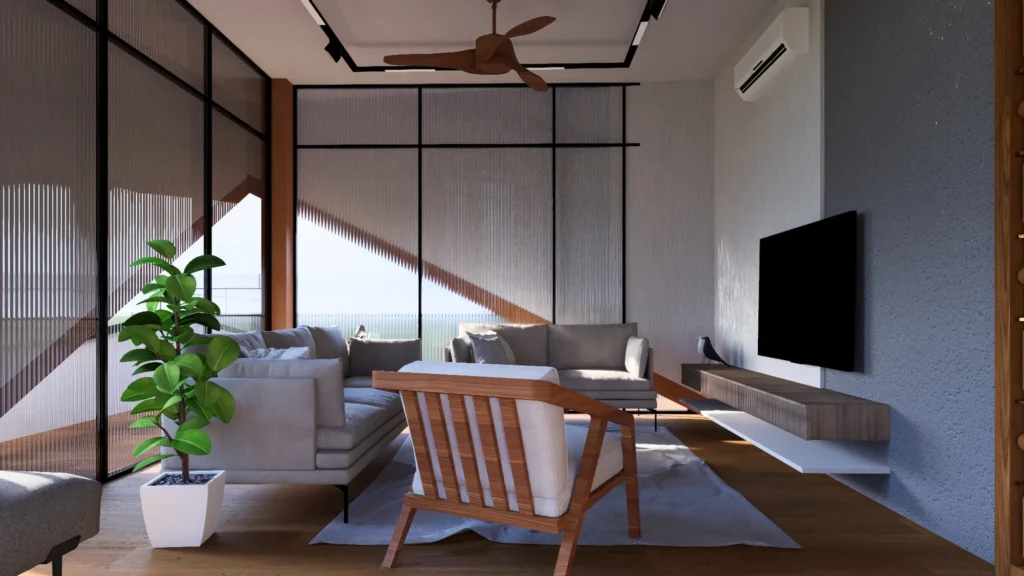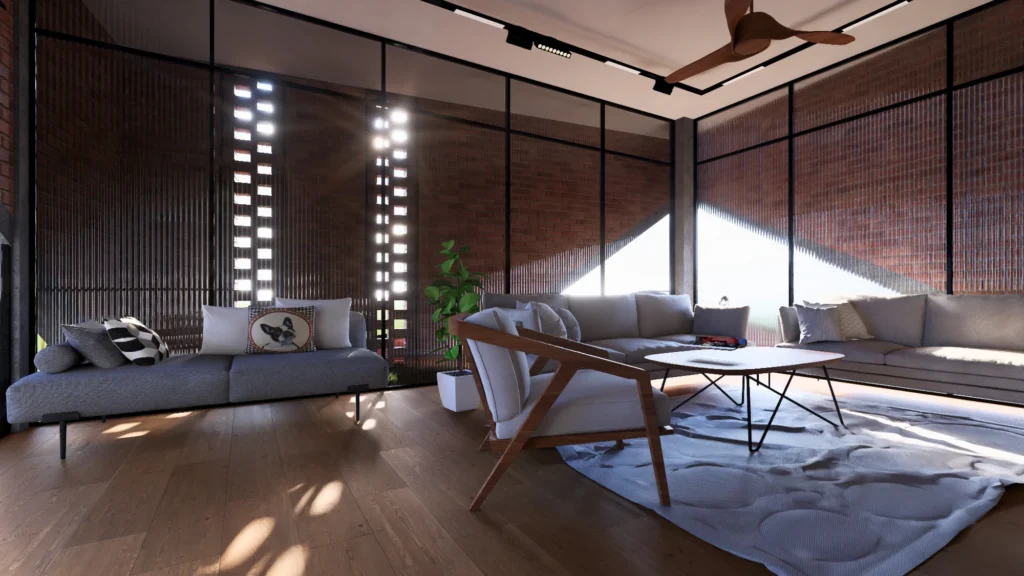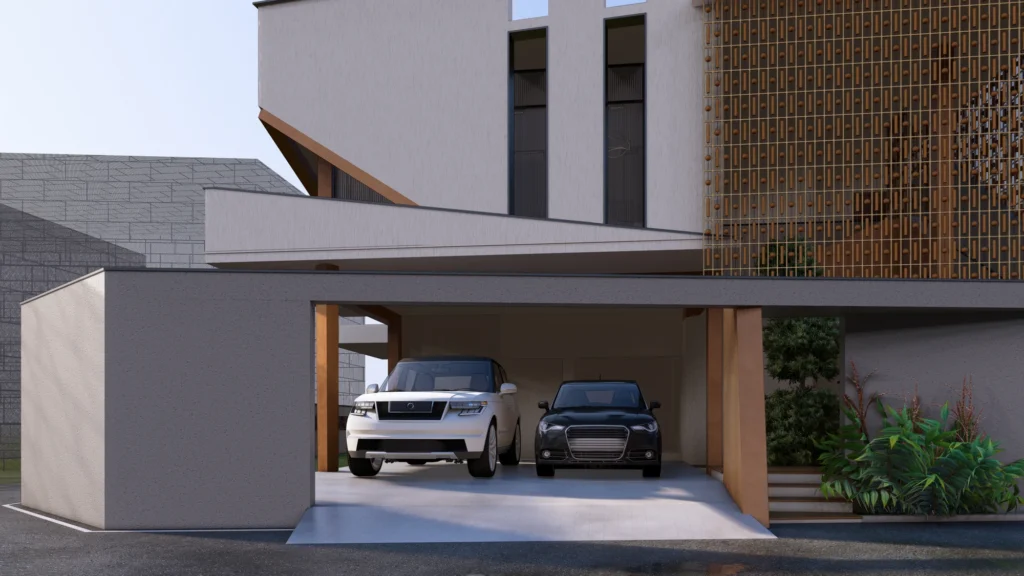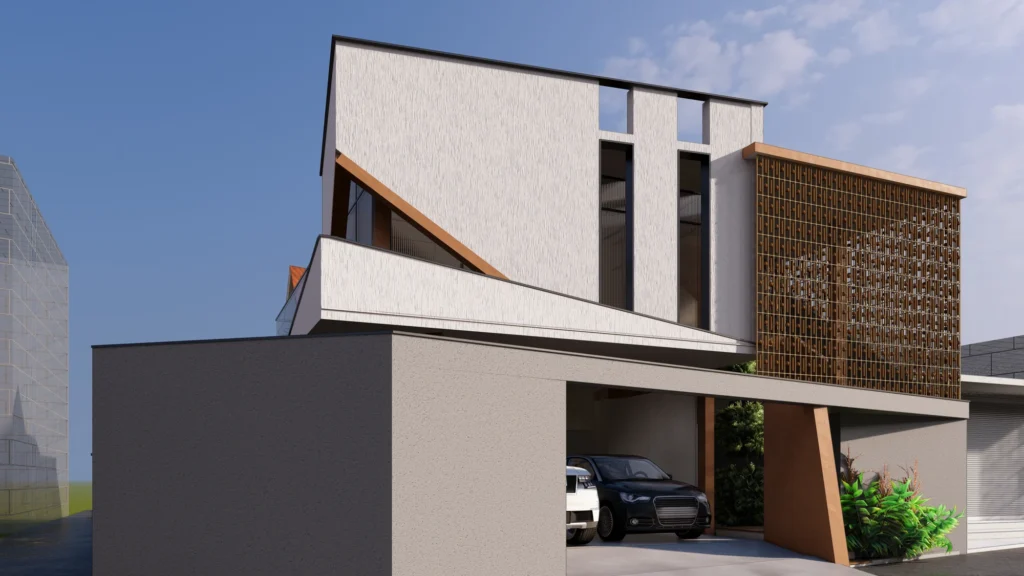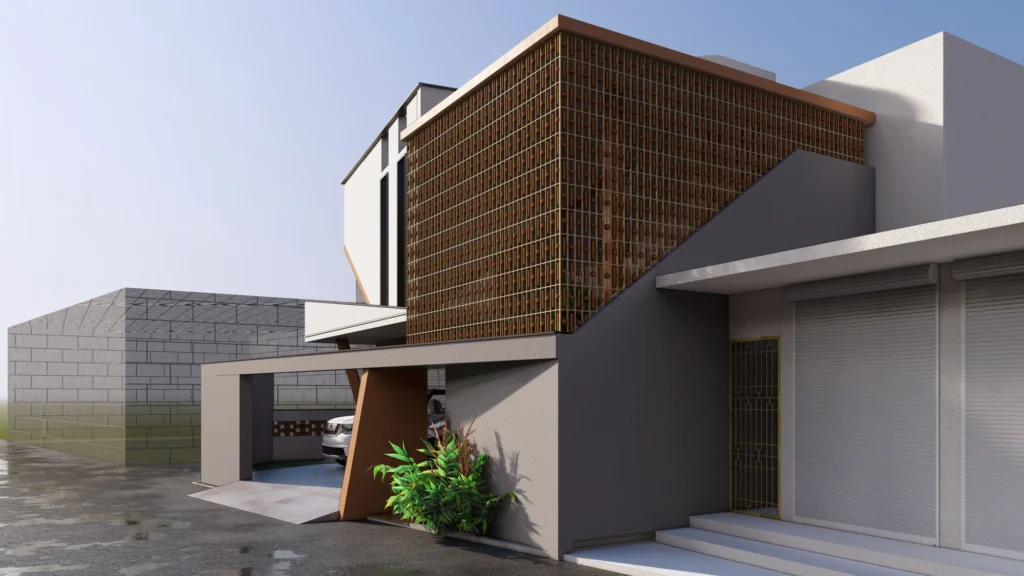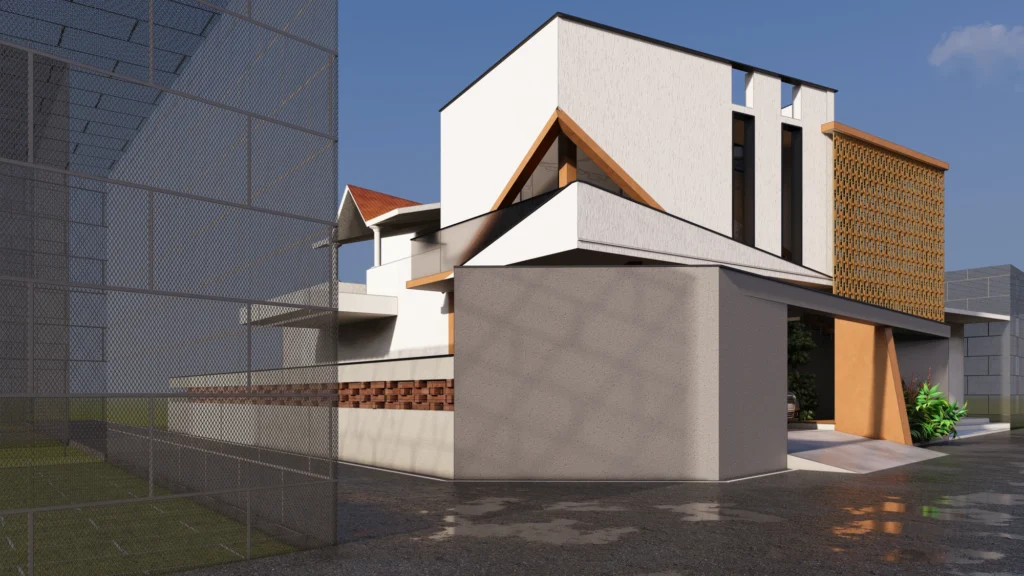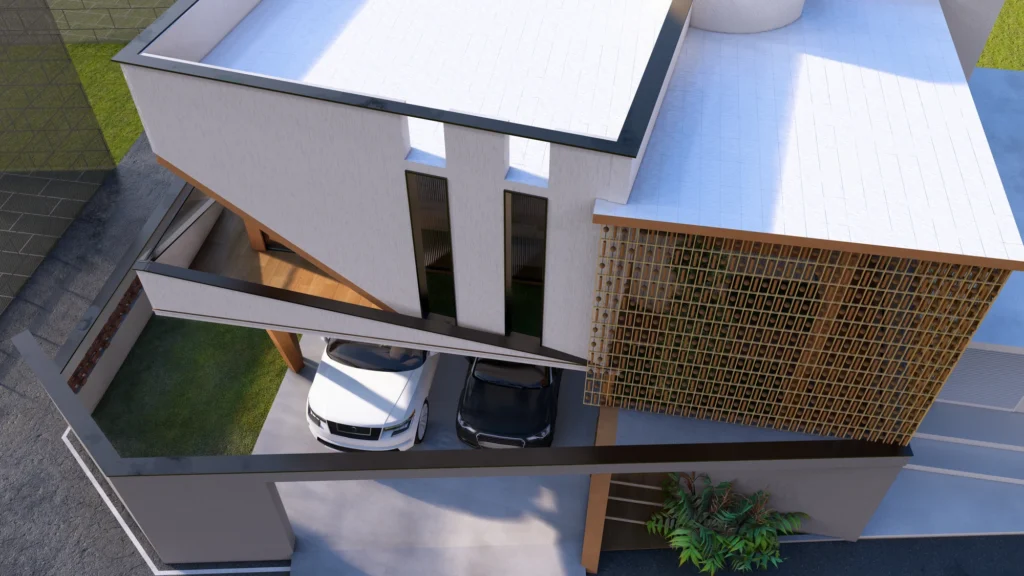
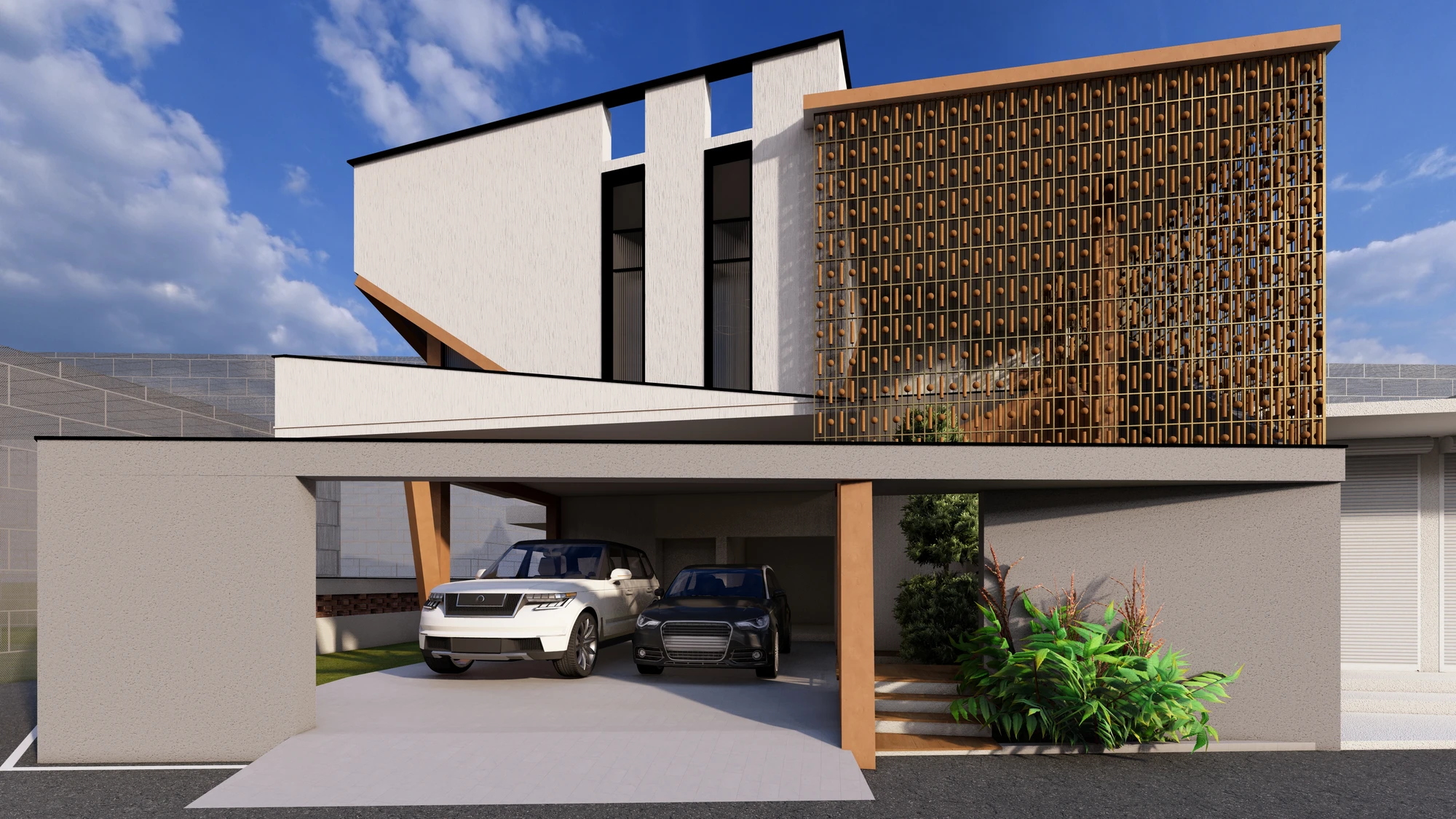
A compact house named for its veil — an upper volume wrapped in a screen of terracotta dowels, floating over an open carport and filtering the Pattabiram sun.
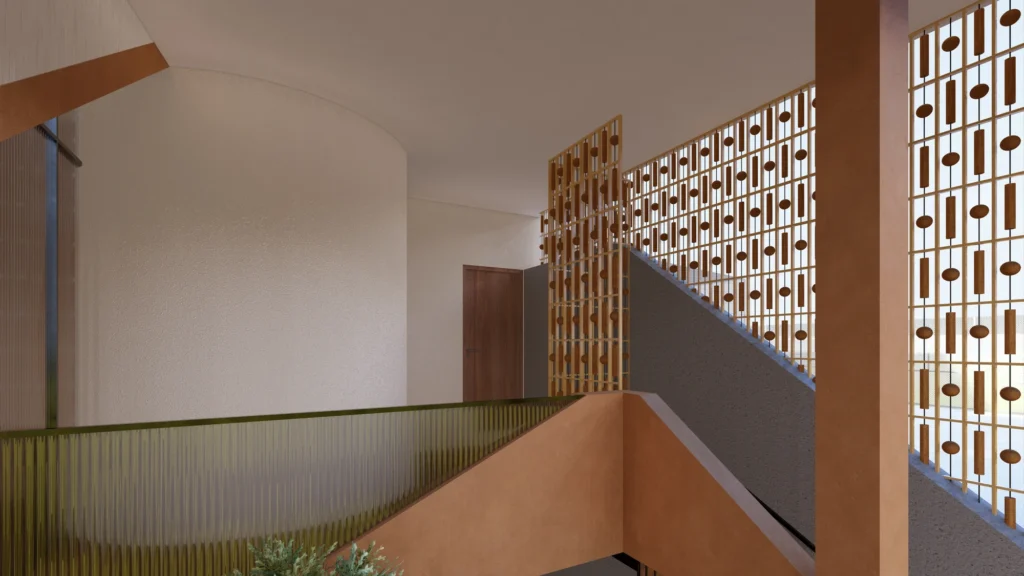
Veil House takes its name from that screen: the upper floor is wrapped in a veil of terracotta dowels — a brise-soleil that floats over an open carport, filters the western sun and casts a shifting field of shadow across the rooms behind it. The white volume folds and tilts above the entry, set by the proportion of the court and the path of light through the day.
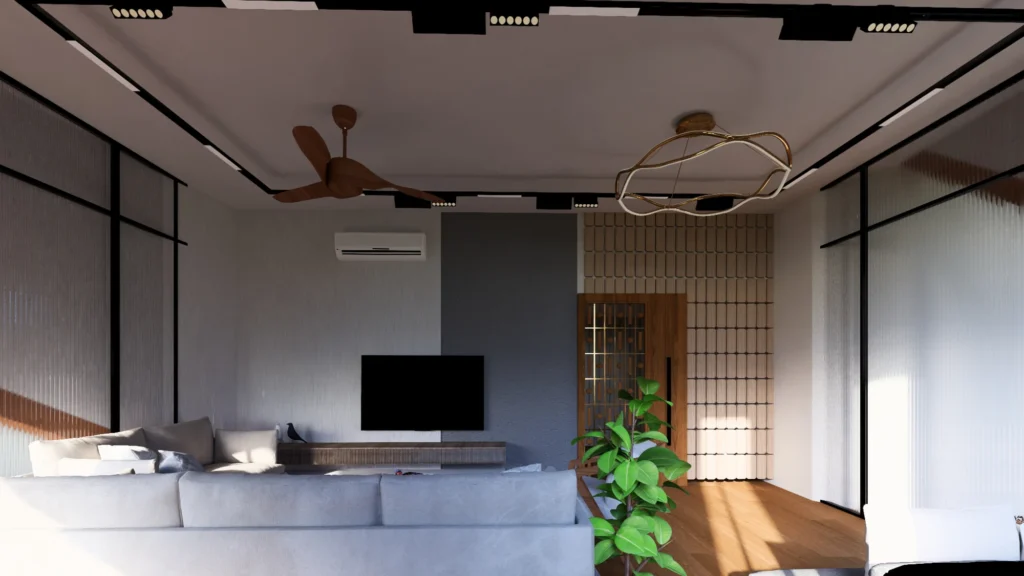
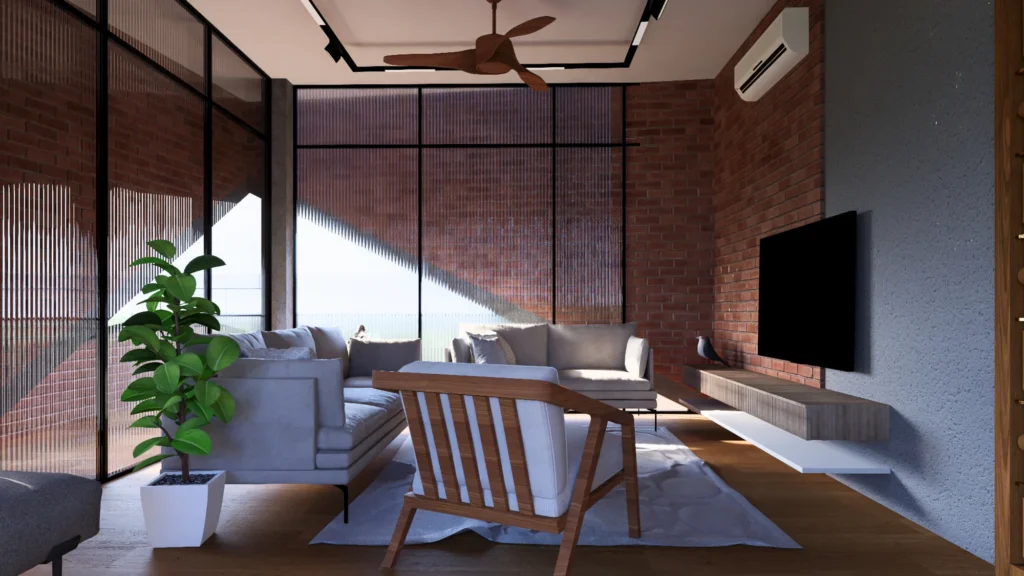
Behind the veil the palette is plain and tactile — exposed brick, steel-framed reeded glass and teak, chosen to serve the geometry rather than set it. A brick spine grounds the living room, reeded glass opens the rooms to the fields, and at the heart of the plan a single tree climbs past a floating timber stair lit through the clay screen.